




Don't miss our Wild Deal of the Week every Thursday afternoon at 4:30pm PST.
Each week we hand pick the best deals and discounts just for you! Find out about our new product releases, gardening tips, and garden trends before anyone else!

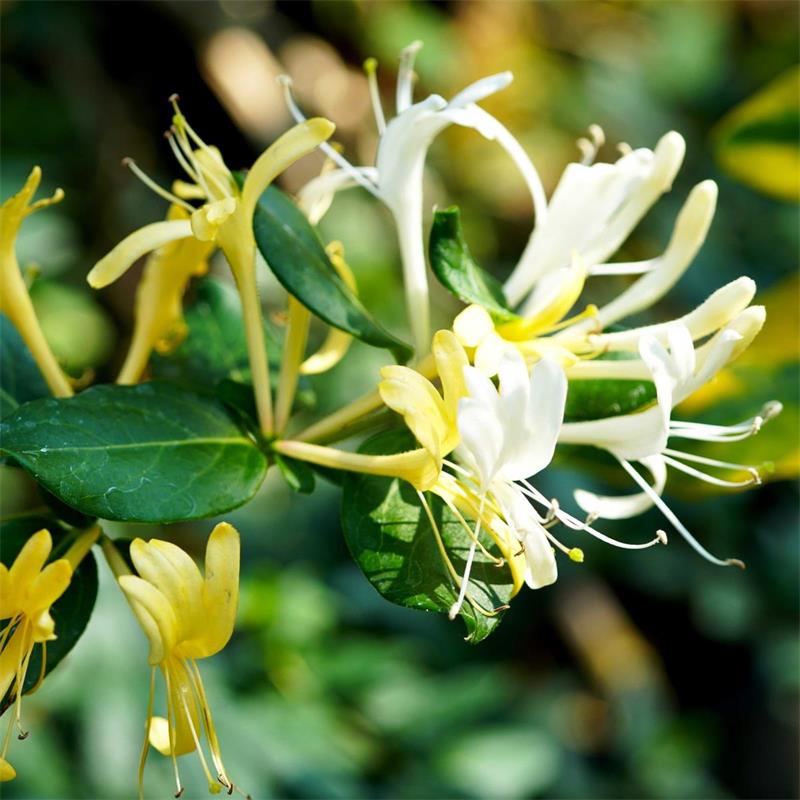
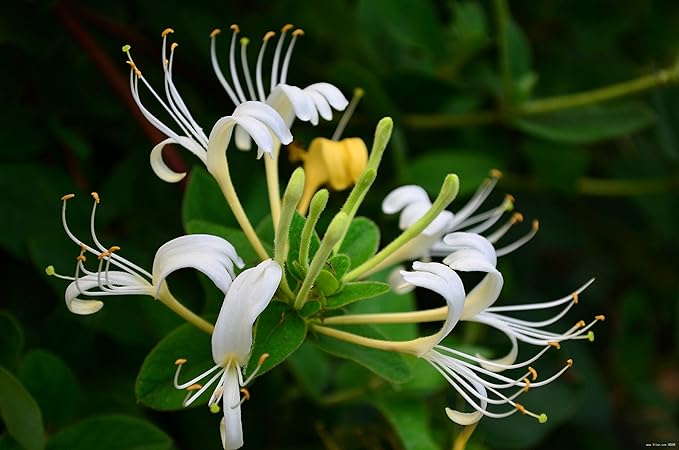
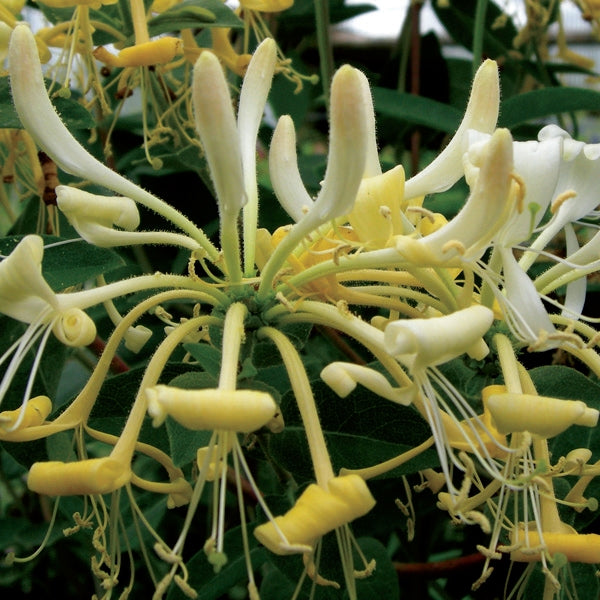
Lonicera periclymenum ‘Honey Baby’ is a compact and fragrant honeysuckle cultivar renowned for its profusion of blooms and manageable size. It features clusters of sweetly scented, tubular flowers that are a creamy white to pale yellow color, which bloom from late spring through summer. This variety is known for its continuous flowering and the attractiveness of its flowers to pollinators like bees and butterflies. ‘Honey Baby’™ is an excellent choice for garden borders, containers, or as a low hedge, reaching a height and spread of about 1.5 to 2 meters (5 to 6.5 feet). It thrives in full sun to partial shade and is relatively low-maintenance, making it a charming addition to any garden landscape.
| Flower Color | Yellow |
| Flower Form |
Tubular Clusters
|
| Flowering Period | Summer-Fall |
| Mature Height | 3-6′(1-2m) |
| Planting Aspect | Full Sun |
| USDA Zone | 4 |
At Wildwood, we aim to make sure every plant arrives healthy and safe to your door in time for your planting period. The shipment of your order will follow our approximate schedule found below where timing will be dependent on what is being shipped, your planting zone, and the current weather conditions for shipping.
| Zone | Earliest Shipping Time |
| 1-3 | Mid May |
| 4-5 | Late April |
| 6 | Early to Mid April |
| 7-9 | Late March |
All times listed are the earliest dates shipping can start in that zone. Shipping times can change due to harsh weather conditions or supplier delays if they occur.
Not sure what planting zone you are? Check the map here or visit Natural Resources Canada to find the hardiness zone in your Municipality.
Clematis can be planted as soon as the ground is workable. Like bulbs, clematis will react to the seasons with root growth in the summer and fall and top growth in the spring.
Plant in an area with sufficient light and a well drained soil mix. We recommend digging a 18" by 18" (45cm x 45cm x 45cm) hole and covering the bottom with a mix of rich compost and bone meal. Cover the compost mix with top soil before planting in the hole. Your watered clematis should be planted so that there is 6" (15cm) of stem below the final soil level. The stem should be ripe before burying it so if there is any uncertainty of this, leave the final fill until later in the season.
Most varieties will do well in containers but plant growth and size will depend on the size of the container used and frequency of watering. It is important to include some sort of trellis, sweet pea netting, or cedar stakes to be used as a support system. When planting Clematis in containers, make sure to use something with several drainage holes in the bottom.
Clematis have three main pruning groups that we have simplified as A, B, and C. These groups are based on where the Clematis grows its new flowers. Follow our quick guide below to see when and where you should be pruning your established Clematis vines after their flowering season.
| Group | A | B (1 & 2) | C |
| Flower Time | Spring |
Early Summer and Repeat Blooms B1 (Heavy blooms on old growth in May - June followed by a smaller flush on new growth in September) B2 (Blooms simultaneously on old and new growth from June to September) |
Late Summer |
| Flowers on | Old wood | Old & new wood | New wood |
| When to Prune | After flowering (Summer) | After flowering (Fall / Winter) | After flowering (Winter / Spring) |
| Where to Prune | Cut out weak or dead stems. | Light pruning with variation in length in late Feb. or March. Remove weak or dead wood. | Cut back to two strong sets of buds as close to soil level as possible. |
Overall rating: 5.0 / 5 from 2 reviews.
Review topics: [].
"All plants came on time and in perfect condition. Plant are established and I do wait for blooms."
— Mariola B. (5/5)
"So far, very happy with it. Finally got it into its proper location, and am happily monitoring ing its progress. Looking forward to seeing my first blooms in a few months. I’ve been having problems with powdery mildew on some plants, but am pleased to report that this one seems immune. Anyway, thanks for a lovely addition to my tiny garden!"
— Diana D. (5/5)
